
Review: The New Orleans Jazz Museum
Jazz: a uniquely American art form that emerged organically from the streets of New Orleans. More specifically, it bubbled up at least partly within the bordellos of the Storyville district. A century later, it has conquered the globe and shaped our musical (and sometimes non-musical) culture.
The Jazz Museum may not command the same recognition as Nashville’s Country Music Hall of Fame or Cleveland’s Rock and Roll Hall of Fame, but it remains a vital institution in the Crescent City. Jazz has shaped New Orleans profoundly over the past hundred years, continuing to drive the city’s economy, fuel its nightlife, and influence its schools – many local children learn classic standards as part of their curriculum. The museum is here to shine a light on jazz’s trailblazers, its overlooked figures, and the household names who carried the genre to audiences around the globe.
The collection serves as an approachable and engaging introduction to the history of New Orleans jazz. Housed in the former US Mint, visitors can absorb the music’s story within the added context of the building’s own heritage — not a necessity, but a welcome backdrop. The jazz galleries trace the genre’s evolution in considerable depth, accompanied by photographs that capture some truly iconic imagery. Among the highlights are original instruments — bugles, trumpets, and trombones — once potentially played by legends like Jelly Roll Morton, King Oliver, Tony Jackson, and Kid Ory.
A substantial exhibit dedicated to Louis Armstrong anchors the collection, while a journey back to the pre-jazz era of Congo Square reveals how melodies and rhythms converged in a moment that would change music history forever. Rounded out by recordings, sheet music, and artifacts drawn from a 50,000-piece archive, the museum offers a thorough grounding in jazz’s roots.
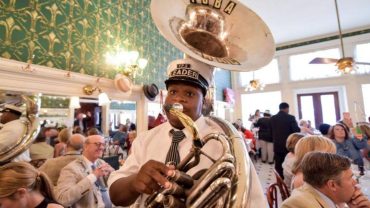
During my visit, a jazz convention was taking place across the city, drawing scores of musicians of varying ages who came to pay homage and admire the remarkable preservation of brass instruments well over a century old. Music aficionados will find no shortage of material to geek out over, including a selection of rare vinyl pressings on display. Families with older children, as well as anyone with a passing interest in the city’s past, will also come away enriched — Louis Armstrong’s early years, for instance, mirror the upbringing of many local children of his era, and the museum offers compelling glimpses into everyday life in New Orleans at the dawn of the 20th century.
The experience is entirely self-guided, allowing visitors to explore at their own pace and to whatever depth they choose, with enough substance to satisfy even seasoned experts. A solid overview is achievable in under an hour — bypass the more granular sections on Armstrong’s biography and the Storyville-themed rooms (worthwhile, but not critical) and you’ll still leave feeling the admission was well spent. The gift shop won’t turn up any elusive Buddy Bolden recordings or century-old tubas, but it offers a respectable selection of T-shirts, accessories, and apparel — a pleasant opportunity to support a meaningful and important local museum.


Comment (0)